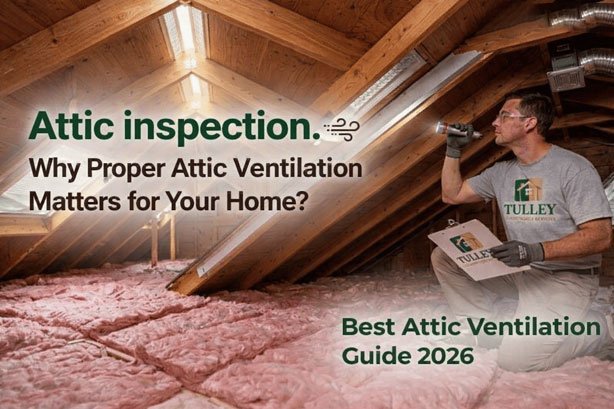
Why Proper Attic Ventilation Matters for Your Home?
Attic ventilation may not be the first thing homeowners think about when looking at their roof, but it plays an important role in the health of the entire home. A properly ventilated attic can help control heat and moisture, protect roofing materials, and reduce the chances of mold, wood rot, and other costly problems. Unfortunately, many homes have too little ventilation, blocked vents, or an unbalanced system that does not move air effectively.
How Attic Ventilation Works: A good attic ventilation system relies on continuous airflow. Cooler outside air enters through intake vents near the lower part of the roof, while warmer air escapes through exhaust vents near the peak.
Common intake vents include:
- Soffit vents
- Drip-edge vents
- Over-fascia vents
Common exhaust vents include:
- Ridge vents
- Box vents
- Turbine vents
- Powered attic fans
The goal is not simply to install as many vents as possible. The intake and exhaust need to work together as a balanced system. Exhaust vents cannot perform properly when there is not enough air entering through the soffits or other intake vents.
Why Attic Ventilation Is Important During the Summer: During a Missouri summer, the temperature inside an improperly ventilated attic can become extremely high. That heat can transfer into the living areas below, causing the air-conditioning system to work harder to keep the home comfortable. Proper ventilation allows built-up heat to escape. While attic ventilation is not a replacement for good insulation or air sealing, it can be an important part of improving the home’s overall comfort and efficiency. Excessive attic heat can also contribute to the premature aging of shingles and other roofing materials.
Why Ventilation Matters During the Winter: Attic ventilation is just as important during cold weather. Warm, moisture-filled air from the home can enter the attic through gaps around light fixtures, attic access doors, bathroom fans, and other openings. When that warm air reaches cold roof decking, condensation can form.
Over time, excessive attic moisture may contribute to:
- Mold and mildew
- Wet or damaged insulation
- Rusted roofing nails
- Wood rot
- Staining on the roof decking
- Reduced insulation performance
Ventilation helps carry moisture out of the attic, but air sealing is also important. If large amounts of warm household air are leaking into the attic, ventilation alone may not solve the entire problem.
Common Signs of Poor Attic Ventilation: Homeowners may not notice ventilation problems until damage has already started. Some common warning signs include:
- An upstairs area that is difficult to cool
- Excessive heat inside the attic
- Condensation or frost on the roof decking
- Mold or dark staining in the attic
- Rusted nails
- Damp or compressed insulation
- Peeling exterior paint near the roofline
- Bathroom exhaust fans venting directly into the attic
- Soffit vents covered by insulation
- Roofing materials aging faster than expected
These symptoms can have several possible causes, so it is important to inspect the entire attic and roofing system before deciding on a repair. More Ventilation Is Not Always Better. One common misconception is that adding another roof vent or powered attic fan will automatically fix the problem. In reality, mixing different exhaust systems can sometimes interfere with the intended airflow. For example, a powered fan may pull air through a nearby ridge vent instead of pulling fresh air through the soffit vents. This can short-circuit the system and leave portions of the attic poorly ventilated.
Before adding vents, the home should be evaluated to determine:
- The size of the attic
- The amount of existing intake ventilation
- The amount of existing exhaust ventilation
- Whether the soffit vents are blocked
- Whether bathroom or kitchen fans terminate in the attic
- Whether the attic floor needs additional air sealing
- Whether insulation is restricting airflow
Every roof is different, and the correct solution depends on the home’s design. Ventilation and Insulation Must Work Together. Ventilation, insulation, and air sealing are separate parts of the same system. Insulation slows heat transfer between the home and the attic. Air sealing helps prevent warm, moist household air from leaking into the attic. Ventilation allows unwanted heat and moisture to escape. If one part of the system is missing or installed incorrectly, the homeowner may still experience uncomfortable rooms, high energy use, moisture problems, or premature roof deterioration. Baffles may also be needed near the eaves to prevent insulation from blocking the soffit vents. These channels allow air to travel from the soffits into the attic without blowing through or disturbing the insulation.
Have Your Attic Ventilation Inspected?
- If your upstairs rooms stay unusually hot, you notice moisture in the attic, or you are planning to replace your roof, it is a good time to evaluate the ventilation system.
- A proper attic inspection can help identify blocked vents, inadequate intake, poorly placed exhaust vents, insulation problems, and moisture concerns before they cause more serious damage.
Tulley Contracting Services helps homeowners throughout Franklin County and the surrounding Missouri communities evaluate their roofing, attic ventilation, insulation, and exterior systems. Our goal is to look at how the entire system is working—not simply add another vent and hope it solves the problem.
Contact Tulley Contracting Services to schedule an inspection or discuss concerns about your roof and attic ventilation.
Please checkout out other services here
Please Visit Our Social Media: Facebook , Instagram , Linkedin